Hounslow, Middlesex Family History Guide
























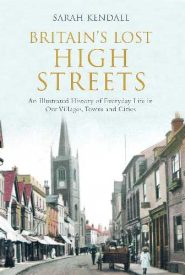







Hounslow is an Ecclesiastical Parish and a market town in the county of Middlesex, created in 1836 from Heston Ancient Parish and Isleworth Ancient Parish; located on High Street.
Alternative names:
Parish church:
Parish registers begin:
- Parish registers: 1708
- Bishop’s Transcripts: 1836
Nonconformists include: Church of Jesus Christ of Latter-day Saints, Independent/Congregational, Primitive Methodist, and Wesleyan Methodist.
Table of Contents
Adjacent Parishes
Hounslow Parish Registers
Hounslow Marriages 1708 to 1812 Middlesex Parish Registers Marriages V. 4. Edited by W. P. W. Phillimore, M.A., B.C.L., Thomas Gurney. London: Issued to the Subscribers by Phillimore & Co., Ltd., 124 Chancery Lane. 1912. – This book is a free download from Parishmouse
Parish History
The Imperial Gazetteer of England & Wales 1870
HOUNSLOW, a town, a chapelry, and a quondam heath in Middlesex. The town is in the parishes of Heston and Islesworth; stands on the edge of the quondam heath, on a loop line of the Southwestern railway, about 1½ mile from the Thames, 3½ W by N of Richmond, and 9 WSW of Hyde Park corner in London; is within the jurisdiction of the metropolitan police; and has a station with telegraph on the railway, and a post-office under London W.
It was known, at Domesday, as Hondeslawe; it became the seat of a priory in the 13th century; it acquired importance from being situated on the great line of thoroughfare from London to the west of England; it was officially reported, in 1650, to contain then 120 houses, mostly inns and ale houses dependent upon travellers; it continued to flourish, in connexion with the thoroughfare, till the era of railways: it then sank, for a time, into much depression; it afterwards rose to new prosperity, and underwent much improvement; it now presents a pleasing appearance, with modern shops and good houses; it possesses advantages which render it a favourable residence for gentlemen connected with the metropolis; it once had a weekly market, and still has fairs on Trinity Monday and the Monday after Michaelmas; it publishes a weekly newspaper; and it has a church, an Independent chapel, two Baptist chapels, a town hall, and a subscription school.
The priory at it was founded in 1211; belonged to the order of Trinitarians for the redemption of captives; went, at the dissolution, to Lord Windsor; and passed to the Bulstrodes and others. The church of it became the church of the chapelry.
The present church is a modern reconstruction, in the Italian style; was enlarged, by the addition of a chancel, in 1856; consists of nave, aisles, and chancel, with porch and bell turret; is adorned with twelve cupolas or spires; and contains a handsome font, a mural monument of a knight, and a monument to W. Bulstrode, an ambassador of the time of Charles II. The Independent chapel contains about 500 sittings.
The town hall was built at a cost of upwards of £3, 000; is a recent and ornamental edifice; and contains a banking office, a reading room, and a library. Pop. of the town in 1851, 3, 514; in 1861, 5, 760. Houses, 1, 304. Pop. of the Heston portion in 1861, 3, 198. Houses, 667. Robert de Hounslow, who died in 1340, Roan, auditor to Queen Elizabeth, and Henry Elsynge, clerk to the house of Commons in the time of Charles I., were natives.
The chapelry is less extensive than the town, and was made ecclesiastically parochial in 1835. Pop. in 1861, 5, 201. Houses, 1, 129. Pop. of the Heston portion, 2, 345. Houses, 483. The living is a p. curacy in the diocese of London. Value, £305. Patron, the Bishop of London.
The heath extended westward from the town; comprised between 4, 200 and 6, 500 acres; was, at one time, notorious for highway robberies, and celebrated for races; but has been mostly enclosed; and is now beautified with plantations, and with numerous handsome residences. It retains traces of ancient encampments; and it had, in particular, a camp of Cæsar, near the Roman way to Staines. A conference was held on it, in 1217, between the deputies of Henry III. and the Dauphin; an encampment of Gloucester was on it, in 1267, against Henry III.; an encampment of Charles I., in 1642, before the battle of Brentford; encampments of Essex, in 1642 and 1647; encampments of James II., in 1686 and 1688; an encampment of Marlborough in 1740; and reviews were held on it by George III. A portable wooden chapel of James II. stood on it, in connexion with his encampments; and, after the Revolution, was removed, by Dr. Tenison, to Conduit street. General Roy’s base line of 27, 404 feet, for the trigonometrical survey, was laid down on it in 1784. Large cavalry barracks for the London district, an exercising ground of about 300 acres for reviewing troops, and militia quarters and an arsenal, are now on it.
Extensive gunpowder mills stand beyond the barracks, 2 miles WSW of the town; bear commonly the name of Hounslow mills, but are within Twickenham parish; and are notable for an explosion in 1835, which was felt for many miles around, and for another in 1850, which was heard at distances of from 40 to 60 miles.
Source: The Imperial Gazetteer of England & Wales [Wilson, John M]. A. Fullarton & Co. N. d. c. [1870-72].
A Topographical Dictionary of England 1848
HOUNSLOW, a district chapelry, and formerly a market-town, partly in the parish of Isleworth, but chiefly in that of Heston, union of Brentford, hundred of Isleworth, county of Middlesex, 9½ miles (W. S. W.) from London; containing 3097 inhabitants, of whom 1666 are in the Isleworth portion.
This place, anciently called Hundeslawe, is situated on the principal road to the west of England, and consists chiefly of a long street, extending from east to west, irregularly paved, and lighted with gas; the inhabitants are well supplied with water.
A priory of friars, of the order of the Holy Trinity, was founded here in the thirteenth century, the revenue of which, at the Dissolution, was £80. 15. 0¼. In 1296, a charter was granted to the prior for a market on Thursday, and an annual fair; the former has been long discontinued, but fairs are held on Trinity Monday and Tuesday, and the Monday following Michaelmas-day, for the sale of horses, cattle, &c.
Adjoining the town, on the west, was formerly an extensive heath, the site of ancient encampments, and at different periods a military station, or place of rendezvous for troops, especially in the reigns of Charles I. and James II. On this heath are barracks for cavalry, which afford accommodation for 360 men with their horses. The heath has been inclosed, in pursuance of an act of parliament passed in the 53rd of George III., since which many buildings have been erected here.
About two miles to the south-west of Hounslow are the extensive gunpowder-mills of Messrs. Curtis and Harvey, which have been very much improved within the last few years, and where a curious pump, worked by wind-sails, raises from thirty to fifty tons of water in a minute. Here are also another gunpowder-mill, and a mill for dressing flax.
The living is a perpetual curacy; net income, £125; patron, the Bishop of London. The ancient chapel of the priory, which, after the Reformation, was used as a chapel of ease to Heston, was taken down, and the erection of a new church on its site was completed in Dec. 1829, at an expense of £5310, defrayed partly by the Parliamentary Commissioners, and partly by subscription; it is a fine edifice, in the later English style, with two turrets surmounted by dwarf spires. There are places of worship for Independents and Wesleyans.
Source: A Topographical Dictionary of England by Samuel Lewis 1848
Parish Records
FamilySearch
Administration
- County: Middlesex
- Civil Registration District: Brentford
- Probate Court: Court of the Archdeaconry of Middlesex
- Diocese: London
- Rural Deanery: Not created until 1858
- Poor Law Union: Brentford
- Hundred: Isleworth
- Province: Canterbury