Halifax Yorkshire Family History Guide















Halifax is a town in West Yorkshire, England, with a rich and varied history. It was once a major centre of the woolen and cloth trade, and it has many historic buildings and landmarks that reflect its past.
Table of Contents
Parishes
Halifax consists of the following parishes:
- Halifax St John the Baptist, Yorkshire
- Halifax Holy Trinity, Yorkshire
- Halifax St Ann in the Grove, Yorkshire
- Halifax St James, Yorkshire
- Halifax St John in the Wilderness, Yorkshire
Nonconformists include: Baptist, Church of Jesus Christ of Latter-day Saints, General Baptist, General Baptist New Connexion, Independent/Congregational, Inghamite, Methodist New Connexion, Particular Baptist, Presbyterian, Presbyterian Unitarian, Primitive Methodist, Roman Catholic, Society of Friends/Quaker, Unitarian, Wesleyan Methodist, and Wesleyan Methodist Association.
Halifax Parish Registers
The Parish Register of Halifax, co. York vol. 1 Baptisms, 1538-1593. Transcribed and edited by E. W. Crossley. Publisher: The Yorkshire Parish Register Society Date of publication: 1910 – This book is a free download from Parishmouse
The Monumental and other Inscriptions in Halifax Parish Church
The Monumental and other Inscriptions in Halifax Parish Church edited by E. W. Crossley. Monumental Inscriptions, Inscriptions relating to stained glass windows etc., Inscriptions on grave covers, Addenda, Index nominum, Index locorum. Publisher: John Whitehead & Son, Alfred Street, Boar Lane, Leeds Date of publication: 1909. – This book is a free download from Parishmouse
Paver’s Marriage Licences
It would appear that a good many licences were never used. So genealogists should exercise a little care in their acceptance of the licenses.
1630 Thomas Bower, Bradford, and Isabel Newton, Halifax—either place. (At Halifax, 7 Dec, 1630)
1630 Robert Whitehead and Ann Wade, Hallifax—there. (At Halifax, 13 Nov., 1630.)
1630 Thomas Robinson and Silence Boyes, Halifax—there. (At Halifax, 8 Dec. 1650.)
1630 Tobias Barroclough and Martha Blackwood, Halifax—there. (At Halifax, 29 Dec, 1630.)
1630 William Lister, Bradford, and Grace Waterhouse, Halifax—either place. (At Halifax, 19 Jan., 1630-1)
1630 James Brigg, Halifax, and Jane Greaveson, widow, Kettlewell.
1630 John Sutcliffe and Phebe Wood, Halifax—there.
1630 Edmund Whitwell, Elland, and Elizabeth Clay, Halifax—at Elland. (At Elland, 1 Jan., 1630-1. His name Whittell in the register, which is most probably correct, there being many of that name there.)
1630 William Lister and Ann Hunter, Halifax—there. (At Halifax, 19 Jan., 1630-1.)
1630 Richard Barroclough and Isabel Law, Halifax—there. (At Halifax, 17 Jan., 1630-1.)
1630 James Hilliley, Hallifax, and Mary Naylor, Heptonstall—either place. (At Halifax, 26 Feb., 1630-1.)
1630 Roger Radcliffe, Horbury, clerk, Dean. Doncaster and Pontefract, and Grace King, widow, Halifax—either place. (At Halifax, ii Jan., 1630-1.)
1630 Samuel Furnes and Susan Sutcliffe, Halifax—there. (At Halifax, 22 Feb., 1630-1.)
1630 John Holgate, Halifax, and Elizabeth Farrer, Elland—either place. (At Elland, 22 Feb., 1630-1.)
1630 Nathaniel Crosland, gent., Earsden, diocese Durham, and Jane Crosland, Halifax — either place.
1630 John Scholefield, Halifax, and Hesther Maude, Sowerby, Halifax—there.
1630 Samuel Midgley and Hesther Brooksbank, Halifax—there. (At Halifax, 17 Mar. 1630-1)
Source: The Yorkshire Archaeological Society Record Series Vol XL for the Year 1908; Edited by John WM. Clay, F.S.A., Vice-President of the Yorkshire Archaeological Society; Printed for the Society 1909.
Halifax Parish Records
School Records
The National School Admission Registers & Log-Books 1870–1914 collection offers a rare glimpse into the educational journeys of children across England and Wales during a transformative era. These records often capture names, dates of birth, parental occupations, and school attendance patterns – making them invaluable for family historians, local researchers, and anyone tracing Victorian or Edwardian ancestry. You can view them free with a Findmypast Trial.
Akroyd Place Board School 1886-1900 Admissions
Akroyd Place, Halifax 1886-1948 Log
Battinson Rd School, Halifax 1903-1918 Log
Bermerside Special 1909-1944 Log
Historical Directories
Directory of Halifax, Huddersfield, Holmfirth, and Adjacent Villages 1850. Publisher: Bradford: Printed by Daniel Burton 16, Ivegate. Date of publication: 1850 – This book is a free download from Parishmouse
Origins and Early History of Halifax
The name Halifax comes from the Old English halh-gefeaxe, meaning “area of coarse grass in the nook of land”. The town was recorded as Halyfax in about 1091, and it was part of the large manor of Wakefield that belonged to King Edward the Confessor. After the Norman Conquest, the manor was granted to William, earl of Warenne and Surrey, who donated some churches in Yorkshire, including Halifax, to the Cluniac priory at Lewes in Sussex. The parish church of Halifax was dedicated to St. John the Baptist, the patron saint of wool weavers.
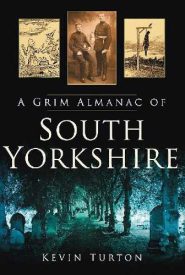
Halifax grew as a market town for grain, wool, and cloth trades, and it had its own laws and customs. One of the most notorious was the gibbet law, which allowed the execution of any thief who stole goods worth more than 13½ pence from the town or its vicinity. The gibbet was a wooden structure with an axe that beheaded the condemned. The last execution took place in 1650, and the gibbet was dismantled in 1658. A replica of the gibbet stands near the original site today.
Halifax in the Industrial Revolution and Victorian Era
Halifax became a thriving industrial town during the Industrial Revolution, especially in the 18th and 19th centuries. It was one of the largest producers of woollen and worsted cloth in England, and it had many mills, factories, warehouses, and workshops. Some of the prominent industrialists and entrepreneurs of Halifax were John Cayley, who built the first water-powered mill in 1779; Jonathan Akroyd, who founded a large textile company; John Crossley, who established a carpet factory; and Sir Francis Crossley, who donated several public buildings and parks to the town.
Halifax also developed its civic and cultural life in this period. The town hall, designed by Sir Charles Barry in the Palladian style, was opened in 1863. The central library and Bankfield museum were both housed in Victorian mansions. The Piece Hall, a unique structure built in 1779 as a cloth market, became a centre for trade and commerce. The Halifax Playhouse, a theatre built in 1866, hosted many performances and events. The town also had several churches, chapels, schools, hospitals, and charitable institutions.
Halifax 20th Century and Beyond
Halifax faced many challenges and changes in the 20th century and beyond. The textile industry declined due to competition from abroad, mechanization, and changing consumer tastes. Many mills and factories closed or moved away, leaving behind empty buildings and unemployment. The town also suffered from bombing raids during World War II, which damaged or destroyed many buildings.
However, Halifax also adapted and diversified its economy and society. New industries emerged, such as brewing, confectionery, engineering, banking, and tourism. Some of the old industrial buildings were converted into offices, shops, apartments, or cultural venues. The town also underwent urban renewal and regeneration projects, such as the redevelopment of the Shay football ground, the restoration of the Piece Hall, and the creation of Eureka!, a children’s museum.
Halifax today is a vibrant and diverse town that combines its heritage with modernity. It is the administrative centre of the metropolitan borough of Calderdale, and it has a population of about 88,000 people. It offers many attractions and amenities for residents and visitors alike, such as museums, galleries, theatres, parks, festivals, markets, pubs, restaurants, and shops.
History of Halifax
Halifax The Imperial Gazetteer of England & Wales 1870
HALIFAX, a town, a township, a parish, a sub-district, and a district, in W. R. Yorkshire. The town stands on the Calder and Hebble navigation, and on the Lancashire and Yorkshire railway, 7 miles SW by S of Bradford, and 16¼ SW by W of Leeds; and has railway communication with all parts of the kingdom. It cannot boast of great antiquity; it does not figure in Domesday book; nor is it mentioned in any record earlier than one which mentions the grant of its church, probably in the early part of the 12th century, by Earl Warren, the lord of the manor, to the priory of Lewes.
That church is said to have occupied the site of an ancient hermitage, to have been dedicated to St. John the Baptist, “the father of hermits,” to have possessed, as a sacred relic, the alleged true face of St. John, to have attracted great numbers of pilgrims from all quarters, and to have been approached by four ways, which afterwards formed the main town thoroughfares, concentrating at the parish church; and it is supposed to have given rise to the name Halifax, either in the sense of “holy face,” with reference to the face of John, or in the sense of “holyways,” with reference to the four roads, the word “fax” being old Norman French for “highways.”
The inhabitants around the church, and throughout a territory co-extensive with the parish, from a period at least as early as 1280, possessed a remarkable power of criminal jurisdiction. Any thief of any commodity of the value of thirteen pence halfpenny, belonging to any of them, if he were taken within the territory, was liable to be immediately brought before the manor bailiff, tried by a jury, and, if found guilty, put to death by decapitation on the first chief market day.
The implement of execution has been variously described, but appears to have been a sort of guillotine, and is remarkable for having suggested to the Earl of Morton, Regent of Scotland, the kindred implement which he introduced to Scotland, which figures so dismally in that country’s history under the name of “the Maiden,” and which is still preserved in the antiquarian society’s museum in Edinburgh.
The axe of the beheading gibbet of Halifax, too, is still preserved in the jail there; and it had, for ages, a notoriety scarcely less than that of the Scottish Maiden. The executions by it ceased so late as 1650; they amounted, during the previous 109 years, to no fewer than 49; and as compared with the causes for them, they seem often to have been not a little merciless.
The police administration in Hull also is reputed to have been, in those times, very severe; and hence the proverbial petition of thieves and vagabonds “From Hull, Hell, and Halifax, good Lord, deliver us.” Yet, so late as the year 1400, only 13 houses, according to Camden, Wright, Watson, and Crabtree, were in Halifax; and even in 1520, after manufacturing enterprise had become strong and prominent, they amounted to no more than accommodated 520 families; but thenceforward they appear to have rapidly multiplied.
The town was garrisoned by the parliamentarians, and seems to have been strongly attached to their cause, in the civil wars of Charles I. Clarendon says, “Leeds, Halifax, and Bradford, three very populous and rich towns, depending wholly upon clothiers, so much maligned by the gentry, were wholly at the disposal of the parliamentarians; ” and he relates that when Lord Fairfax was obliged to quit Selby, Cawood, and Tadcaster, he retreated to Pontefract and Halifax.
Briggs, the mathematician, and Bishops Simson and Hartley, were natives of the town; Watson, the author of the town history, was curate; Sir W. Herschell was organist; Defoe, the author of Robinson Crusoe, was a resident; and Archbishop Tillotson, Sir Henry Saville, and John Foster, the essayist, were natives of the parish. Halifax formerly gave the title of Earl to Montague, and also that of Marquis to Savill, who has been called the accomplished “trimmer.”
The town is situated on the western declivity of a gentle eminence; but, being surrounded by hills of considerable elevation, it appears, on approaching it, to stand in a deep valley.
It once consisted chiefly of rude wood and thatched houses, and must then, with the exception of its church, have presented a very poor appearance; but it now comprises well formed streets, substantial stone built mansions, vast and splendid warehouses, numerous manufactories with lofty chimneys, and several very imposing new churches and new public buildings, so that it now makes a somewhat striking architectural display.
It also has the advantage of being built partly of brick and partly of stone, and the further advantage of fusing into environs of diversified contour and character; so that, as seen on any side, it shows a picturesque and somewhat singular aspect.
Recent improvement, too, has done much for it. One noble new street, called Crossley street, is graced with the magnificent town hall; another fine new street, called Princess street, was early graced with the stately White Swan hotel. These new streets and others are rich in architectural decoration, and in large shops, offices, and public rooms; even the old streets are extensively renovated with new houses and new shops; several parts, both new and old, have warehouses of a size and elegance which out vie public buildings in some other towns; and the suburbs and environs, all round, contain hundreds of new genteel residences.
One of the factories, that of the Messrs. Crossley, is so vast as to employ upwards of 4,000 persons in connexion with carpet manufacture; and one of the warehouses, that of the Messrs. Riley, besides being large, arrests attention by a free handling of Italian architecture, with square headed windows divided by red granite shafts, and a bold overhanging cornice.
The People’s Park also is an interesting feature. This was a gift of Frank Crossley, Esq., M.P., now Sir Francis Crossley, Bart.; and is said to have cost him upwards of £30,000. The ground for it, to the extent of 15 acres, was purchased by him in 1855; and the greater portion of this, or about 12½ acres, was laid out under the superintendence of Sir Joseph Paxton, and includes walks, seats, lakes, fountains, mounds, embankments, parterres, and a grand terrace with eight beautiful Italian statues.
A statue of the donor, in testimony of their gratitude for the gift, by the inhabitants of Halifax, was erected in 1860.
The town hall was erected after designs by the late Sir Charles Barry, said to have been the last designs which he prepared; was opened in Aug. 1863, by the Prince of Wales; cost about £50,000; is in the Italian style, of very ornate character; forms a parallelogram, of about 140 feet by 90; has a corner tower, 35 feet square, surmounted by a spire rising to the height of 175 feet; is decorated with statues and carvings, designed by the late Mr. Thomas, and chiefly illustrative of the arts and other local interests of Halifax; is appropriated to the uses of the corporation; and contains an elegant public hall, 50 feet long, 40 feet wide, and 40 feet high.
The piece hall, for the market sale of woollen cloth, was erected in 1779, at a cost of £12,000; occupies a square of 10,000 yards; forms a hollow stone built quadrangle, of three stories on the east side, two stories on the other side, each story with a colonnade; contains 312 separate rooms; and encloses a lawn, on which the hustings for elections are erected. The new market for butchers’ meat, fish, and Vegetables, is very spacious.
The exchange reading and news rooms are in Bank buildings, and are well supplied with periodicals and newspapers. The assembly and concert rooms were erected in 1828. The theatre is at Ward’s end. The Oddfellows’ hall is in St. James road; and is a stone building, with handsome tetra style portico. The new baths are in Park road; include a first class swimming bath; and were opened in 1859.
The gasworks were erected in 1822, at a cost of £16,000; are now, with the water works, the property of the corporation; and, since they became so, have been enlarged at great expense. The jail, in Jail lane, was formerly the property of the Duke of Leeds, as lord of the manor. The county court debtors’ jail has capacity for 100 male and 10 female prisoners. The monument of Prince Albert was erected in 1864; and is a bronze equestrian statue, on a granite pedestal. A bridge over the Hebble, to cost £21,000, was founded in 1869.
The mother church, that of St. John the Baptist, stands at the east end of the town; is supposed to have been originally built, in the time of Henry III., by Earl Warren; comprises little now which can date earlier than the middle of the 15th century; consists of north and south porches, nave, chancel, north and south aisles, and two chapels, with western square tower 118 feet high; measures 192 feet in length and 60 feet in breadth; was repaired in 1807 and in 1817; and contains a splendid carved screen, a beautiful spiral cone covered ancient octagonal font, two finely sculptured monuments to the Rawsons by Westmacott, a marble monument to Dr. Coulthurst also by Westmacott, and several other monuments and brasses.
All Souls church, or Haley hill church, noticed in our article on HALEY HILL, ranks next in interest to St. Johns. Trinity church, in Harrison lane, was built in 1795; and is a handsome Grecian edifice. St. James’ church was built in 1828; and is in bad Gothic style. St. Mary’s church was built in 1869, at a cost of £5,500. A new cemetery was formed, in 1841, at a cost of about £5,000; and another, at Stoney Royd, was formed in 1861, at a cost of about £10,000.
An Independent chapel, near the railway station, was built in 1857, at a cost of above £15,000; is in very ornate decorated English style; and consists of nave, cloisters, and transepts, with central tower and crocketed spire, rising to the height of 235 feet. Another Independent chapel, in the first pointed style. was built in 1869, at a cost of about £9,000. There are also three other chapels for Independents, three for Baptists, one for Quakers, one for Unitarians, two for Wesleyans, one for Primitive Methodists, two for New Connexion Methodists, one for United Free Methodists, and one for Roman Catholics.
The free grammar school, on Skircoat heath, was founded, in 1585, by Queen Elizabeth; has an endowed income of about £200, with three scholarships at Magdalene College, Cambridge; and numbers among its pupils John Milner, Dean Jackson, and Bishop Jackson. There are national schools in Church street, Victoria street, Cross hills, and Harrison road; and British schools, in Great Albion street and Wade street. An industrial school was founded, near the parish church, in 1863, by John Crossley, Esq., the mayor. The orphan asylum, on Skircoat moor, was built, at great cost, by the Crossley Brothers; and is a magnificent and very capacious edifice.
Waterhouse’s charities sprang from a bequest of Nathaniel Waterhouse in 1642, modified by an act in 1852; were rebuilt, in the Tudor style, at a cost of £10,000, in 1855; form three sides of a quadrangle, in detached buildings; contain schools for 30 boys and 30 girls, and alms houses for 24 women; and have an endowed income of about £1,500.
Crossley’s alms houses, between Hopwood lane and Lister lane, were erected and endowed in 1855, by Frank Crossley, Esq., now Sir Francis Crossley, Bart.; are in the domestic Gothic style of the 15th century; and form a handsome range of twenty two houses. There are also other endowed schools and other alms houses.
The Halifax infirmary, in Blackwall, was erected in 1836; was then a large and well arranged building; and was extended in 1864. The mechanics’ institution was built in 1857; includes a hall for concerts, lectures, and other purposes, capable of accommodating 1,300 persons; contains a good library and newsroom; and has, under its roof, a school of art. The philosophical institution was established in 1830, and has a valuable museum. The subscription library, in Harrison road, comprises 11,000 well selected volumes. The working man’s college, in Haley hill, includes classes for chemistry, French, and vocal music. Two weekly newspapers are published.
The town has a head post office, a telegraph office, three banking offices, and four chief inns; and is a seat of petty sessions, a seat of county courts, and a polling place. A weekly market is held on Saturday; and fairs, on 24 June and the first Saturday of Nov.
Woollen manufacture seems to have existed, on a small scale, so early as 1414; gradually became considerable; acquired an impetus, in the time of Henry VII., from the immigration of many Flemish; was powerfully stimulated, toward the end of last century, by improvements in machinery; and now employs upwards of 16,000 persons. Carpets, cashmeres, orleanses, coburgs, merinoes, lastings, alpacas, damasks, baizes, narrow cloths, broad cloths, kerseymeres, moussline de laines, shalloons, fancy waistcoatings, and other fabrics are made. Dyeing, card making, and the manufacture of chemicals also are carried on.
The town was made a parliamentary burgh, by the Reform act, in 1832; was constituted a municipal burgh, under the new act, in 1848; sends two members to parliament; and is governed by a mayor, 10 aldermen, and 30 councillors. Its limits were extended in 1865, and include all the township of Halifax, and parts of the townships of Ovenden, Skircoat, Northowram and Southowram. Borough income in 1855, £46,898. Electors in 1868, 1,788. Pop. of the old borough, in 1851, 33,582; in 1861, 37,014. Houses, 7,807. The township comprises 990 acres. Real property, in 1860, £132,020; of which £11,136 were in canals, and £4,079 in gas works. Pop. in 1851, 25,161; in 1861, 28,990. Houses, 6,120.
The parish contains also the townships of Northowram, Southowram, Skircoat, Shelf, Ovenden, Midgley, Warley, Norland, Sowerby, Soyland, Rishworth, Barkisland, Stainland, Elland-with-Greetland, Hipperholme-with-Brighouse, Rastrick, Fixby, Wadsworth, Erringden, Heptonstall, Stansfield, and Langfield; the last five of which are in the district of Todmorden. Acres of the parish, 75,740. Real property, £481,119; of which.h £3,096 are in mines, £6,606 in quarries, £11,136 in canals, and £5,629 in gas works. Pop. in 1851, 140,257; in 1861, 147,988. Houses, 31,089.
Baines says, – ”From the boundary of Lancashire to the valley which separates the townships of Halifax and Ovenden from Northowram, the whole basis of the parish is gritstone. Immediately to the east of this valley, argillaceous strata, with their general concomitants, stone and iron, once more appear; and to this cause, together with the abundant supply of fuel, and the rapid descent of its numerous brooks, so important in manufacture before the introduction of the steam engine, the parish is greatly indebted for its wealth and population. The land in the vicinity of the town is naturally sterile and unproductive; it is, however, in a good state of cultivation; and this township, more perhaps than any other in the county, serves to prove how completely the wealth and industry of man can triumph over the most stubborn indispositions of nature.”
Remains of entrenchments occur in various parts of the parish, and a few British coins have been found; but other vestiges or relics of antiquity are scant.
The livings of St. John the Baptist, Trinity, and St. Paul’s King Cross are vicarages, and the livings of St. James and St. John-in-the-Wilderness are p. curacies, in the diocese of Ripon. Value of St. John the B., £1,678; of Trinity, £300; of St. James, £350; of St. Paul’s, £180; of St. John-in-the-W., £150. Patron of St. John the B., the Crown; of St. Paul’s, alternately the Crown and the Bishop; of the others, the Vicar of Halifax. St. Mary, S. St. George, Sowerby Bridge, Copley, Harleywood, and Stainland, are separate benefices.
The sub-district comprises the townships of Halifax and Skircoat. Acres, 2,330. Pop., 36,437. Houses, 7,724.
The district comprehends also the sub-district of Rastrick, containing the townships of Rastrick and Fixby; the sub-district of Southowram, conterminate with the township of Southowram; the sub-district of Elland, containing the township of Elland-with-Greetland and the township of Stainland; the sub-district of Ripponden, containing the townships of Barkisland, Rishworth, and Soyland; the sub-district of Sowerby, containing the townships of Sowerby and Norland, and the lower division of Warley township; the sub-district of Luddenden, containing the township of Midgley and the upper division of Warley township; the sub-district, of Ovenden, conterminate with the township of Oveuden; the sub-district of Northowram, containing the townships of Northowram and Shelf; and the sub-district of Brighouse, containing the Halifax township of Hipperholme-with-Brighouse, and the Dewsbury hamlets of Hartshead and Clifton.
Acres of the district 51,784. Poor rates in 1863, £27,763. Pop. in 1851, 120,958; in 1861, 128,673. Houses, 27,000. Marriages in 1862, 1,233; births, 4, 623, of which 272 were illegitimate; deaths, 3,081, of which 1,283 were at ages under 5 years, and 27 at ages above 85. Marriages in the ten years 1851-60, 12,096; births, 45,315; deaths, 29,398.
The places of worship, in 1851, were 31 of the Church of England, with 20,176 sittings; 17 of Independents, with 8,948 s.; 8 of Baptists, with 2,231 s.; 2 of Quakers, with 634 s.; 2 of Unitarians, with 656 s.; 31 of Wesleyan Methodists, with 12,046 s.; 13 of New Connexion Methodists, with 4,381 s.; 11 of Primitive Methodists, with 2,162 s.; 6 of Wesleyan Reformers, with 1,480 s.; 4 undefined, with 192 s.; and 1 of Roman Catholics, with 451 s.
The schools were, 68 public day schools, with 9,469 scholars; 171 private day schools, with 5,501 s.; 136 Sunday schools, with 23,644 s.; and 19 evening schools for adults, with 724 s.
The workhouse is in Gibbet lane; and, at the census of 1861, had 349 inmates.
Source: The Imperial Gazetteer of England & Wales [Wilson, John M]. A. Fullarton & Co. N. d. c. [1870-72].
Famous Wool Merchants in Halifax
Halifax is a town in West Yorkshire, England, that has a long and close connection with the wool trade. The wool trade was the main source of income and prosperity for the town for many centuries, and it produced many famous wool merchants who contributed to the economic, social, and cultural development of the town. Here are some of the most notable wool merchants in Halifax’s history.
John Cayley
John Cayley was born in 1722 in Halifax, and he became one of the most successful and influential wool merchants in the town. He started his career as an apprentice to his uncle, William Cayley, who was also a prominent wool merchant. John Cayley inherited his uncle’s business in 1750, and he expanded it by building several mills and warehouses, and by trading with markets in London, Europe, and America. He also invested in other industries, such as ironworks, coal mines, and canals. He was a generous benefactor to the town, donating money to various causes, such as the Halifax Infirmary, the Blue Coat School, and the Piece Hall. He died in 1795, leaving behind a large fortune and a legacy of civic improvement.
Jonathan Akroyd
Jonathan Akroyd was born in 1757 in Halifax, and he became one of the most innovative and influential wool manufacturers in the town. He started his career as a cloth dresser, but he soon established his own business as a wool stapler and cloth merchant. He was one of the first to adopt new technologies and machines for wool production, such as spinning jennies, carding engines, and power looms. He also pioneered new methods of dyeing and finishing cloth, such as using chlorine bleach and steam presses. He built several mills and factories in Halifax and its vicinity, employing thousands of workers. He also invested in other industries, such as banking, insurance, and railways. He was a philanthropist who supported various charitable and educational institutions, such as the Halifax Literary and Philosophical Society, the Halifax Mechanics’ Institute, and the Halifax School of Design. He died in 1846, leaving behind a large fortune and a reputation for industrial excellence.
John Crossley
John Crossley was born in 1772 in Halifax, and he became one of the most successful and influential carpet manufacturers in the town. He started his career as an apprentice to his father-in-law, James Lister, who was a cloth merchant and carpet maker. John Crossley inherited his father-in-law’s business in 1802, and he expanded it by building several mills and factories, and by introducing new types of carpets, such as Brussels carpets, Wilton carpets, and Axminster carpets. He also improved the quality and design of carpets by using new materials, such as mohair and alpaca wool, and by hiring skilled artists, such as Augustus Welby Pugin. He exported his carpets to markets all over the world, including royal palaces and public buildings. He was a benefactor to the town, donating money to various causes, such as churches, schools, hospitals, parks, and libraries. He died in 1837, leaving behind a large fortune and a family business that continued to prosper.
Sir Francis Crossley
Sir Francis Crossley was born in 1817 in Halifax, and he was the eldest son of John Crossley. He inherited his father’s business in 1837, along with his brothers Joseph and John James. He continued to develop and expand the carpet industry in Halifax, making it one of the largest and most renowned in the world. He also diversified into other industries, such as engineering, shipbuilding, mining, and brewing. He was a politician who represented Halifax in Parliament from 1852 to 1859. He was also a philanthropist who donated money to various causes, such as churches, schools, hospitals, parks, libraries, museums, art galleries, and colleges. He was created a baronet in 1863 for his services to industry and charity. He died in 1872,
leaving behind a large fortune and a legacy of public benefaction.