Sheriff Hutton Yorkshire Family History Guide





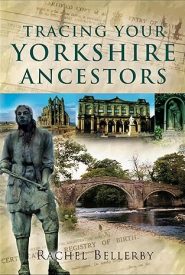













Sheriff Hutton is an Ancient Parish in the county of Yorkshire. Farlington is a chapelry of Sheriff Hutton.
Other places in the parish include: West Lilling, Stittenham, Sheriff Hutton with North Ings and Cornborough, Sheriff Hutton with Cornbrough, Sheriff Hutton Moor and Lilling Green, East Lilling, and Cornbrough.
Alternative names: Hutton Sheriff
Parish church:
Parish registers begin:
- Parish registers: 1628
- Bishop’s Transcripts: 1628
Nonconformists include: Primitive Methodist and Wesleyan Methodist.
Table of Contents
Adjacent Parishes
- Strensall
- Foston
- Farlington
- Whenby
- Bulmer with Welburn and Castle Howard
- Marton cum Moxby
- Sutton on the Forest
- Dalby
- Terrington
Parish History
The Imperial Gazetteer of England & Wales 1870
HUTTON (SHERIFF), a village, a hamlet, and a township in Malton district, and a parish partly also in Easingwold and York districts, N. R. Yorkshire.
The village stands near the foot of the Howardian hills, 3 miles NW by N of Flaxton r. station, and 10 NNE of York; and has a post-office under York. The hamlet includes the village, and comprises 4,310 acres. Real property, £4,140. Pop., 892. Houses, 194.
The township includes also the hamlet of Cornbrough, and comprises 5,392 acres. Real property, £5,613. Pop., 946. Houses, 203.
The parish contains also the townships of Stittenham and Lillings-Ambo, and the chapelry of Farlington. Acres, 9,425. Real property, £10,105. Pop. in 1851, 1,530; in 1861, 1,397. Houses, 291.
The manor belonged, in the time of Stephen, to Bertrand de Bulmer; passed, by marriage, to the Nevilles, who became Earls of Westmoreland and Warwick; went, after the battle of Barnet, to the Crown; was then given to Richard, Duke of Gloucester, afterwards Richard III.; passed afterwards through varions hands; and belongs now to H.M. Ingram, Esq.
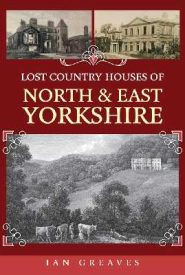
A castle was built on it by Bertram de Bulmer; was rebuilt and greatly enlarged by Ralph de Neville, the first Earl of Westmoreland, who figures in Shakspeare’s “King Henry IV.;” was seized by Edward IV., after the battle of Barnet; became the prison of Edward Plantagenet, under Richard III., till the battle of Bosworth; and was the prison also of the Princess Elizabeth, afterwards queen of Henry VII. Ruins of the castle, in several detached but stately pieces, still exist; and comprise remains of four corner towers, one of them nearly 100 feet high. A moat surrounded the castle; and about one-third of it still remains.
The prefix Sheriff, in the name of the place, was derived from Bertram de Bulmer. Sh. Hutton Park and Lilling Hall are chief residences. The living is a vicarage in the diocese of York. Value, £300. Patron, the Archbishop of York. The church is chiefly of the middle of the 13th century, but has some windows so late as the time of Elizabeth; consists of nave, aisles, and chancel, with a tower; and contains a brass of 1491, and two interesting altar tombs.
The p. curacy of Farlington is a separate benefice. There are chapels for Wesleyans and Primitive Methodists, and a small endowed school.
Source: The Imperial Gazetteer of England & Wales [Wilson, John M]. A. Fullarton & Co. N. d. c. [1870-72].
Parish Records
FamilySearch
Administration
- County: Yorkshire
- Civil Registration District: Malton
- Probate Court: Exchequer and Prerogative Courts of the Archbishop of York
- Diocese: York
- Rural Deanery: Bulmer
- Poor Law Union: Malton
- Hundred: Bulmer
- Province: York