Lickey Worcestershire Family History Guide









































Lickey or The Lickey an Ecclesiastical Parish created in 1858 from Bromsgrove Ancient Parish, Catshill Ecclesiastical Parish. The boundaries of Lickey Ecclesiastical Parish were altered in 1913 when parts of the parish were exchanged with Bromsgrove ancient parish and Catshill ancient parish and gained part of Tardebigge Ancient parish and Alvechurch Ancient Parish. The boundaries were altered again in 1922 with the creation of Barnt Green Ecclesiastical Parish and again in 1933 with the creation of Rubery Ecclesiastical Parish.
The Church of Holy Trinity, The Lickey in Rose Hill was consecrated in 1856. A consolidated chapelry was assigned to it in 1858 out of the parishes of Kings Norton and Bromsgrove. In 1905, the parish was transferred from the diocese of Worcester to the newly created diocese of Birmingham. The boundaries of the parish were revised in 1913 by an Order in Council together with the boundaries of the adjoining parishes of Christ Church, Catshill and All Saints, Bromsgrove. The living is a vicarage in the gift of the vicar of Bromsgrove.
From the 1880s, the population of the area increased, largely due to the overspill from Birmingham and several chapels of ease were set up, two of them subsequently becoming separate parishes: St. Catherine Blackwell (1882); St. Chad, Rubery (1895, becoming a parish in 1933); St. Andrew, Barnt Green (c.1896, becoming a parish in 1922).
Other buildings in the parish were also licensed for worship at various times: chapels attached to Blackwell Recovery Hospital, Wadderton House, Burcot Grange, Lickey Grange.
Table of Contents
Lickey Parish Registers
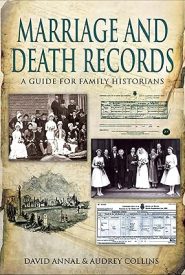
Baptism, Marriage and Burial Records
These records include images of Church of England parish registers of baptism, marriage, and burial records.
Lickey, Worcestershire Church of England Births and Baptisms, 1812-1922
Lickey, Birmingham Church of England Baptisms 1856-1966
Lickey Holy Trinity, Birmingham Church of England Baptisms 1856-1897
Marriage and Banns Records
These records include images of Church of England parish registers of marriages and banns records.
Blackwell Holy Trinity, Birmingham Church of England Marriages and Banns 1858-1952
Death and Burial Records
These records include images of Church of England parish registers of deaths and burial records.
Lickey, Worcestershire Church of England Deaths and Burials, 1813-1997
Blackwell Holy Trinity, Birmingham Church of England Burials 1856-1951
The following Worcestershire Monumental Inscriptions, hosted by Findmypast, are a collection of transcriptions created by the Birmingham & Midland Society for Genealogy & Heraldry.
Lickey Holy Trinity Monumental Inscriptions 1847-1986
Parish History
Imperial Gazetteer of England & Wales 1870
LICKEY, a chapelry in the parishes of Bromsgrove and Kings-Norton, Worcester; on the Birmingham and Gloucester railway, at the junction of the branch to Redditch, 4 miles NE of Bromsgrove. It was constituted in 1858; and it contains the r. station of Barnt Green, and has a post office under Bromsgrove. Pop. in 1861,1,361. Houses, 285. Pop. of the Bromsgrove portion, 876. Houses, 182.
The Lickey hills include Rubury, Bilberry, Rednall, and Beacon; they exhibit scenes of remarkable beauty; they command very extensive and very fine prospects; and one of them is crowned with an obelisk, in memory of the late Earl of Plymouth. A spring here sends off two runnels, one of which goes through the Stour to the Severn, while the other goes through the Rea and the Trent to the German ocean. Pleasure parties from a far extent of surrounding country, and from Birmingham, visit Lickey in the summer months; and visitors find good accommodation at a local hotel.
The living is a p. curacy in the diocese of Worcester. Value, £200. Patron, the Vicar of Bromsgrove. The church was built in 1856, at a cost of about £2,000; is in the early English style; and consists of nave, aisles, and chancel, with a belfry. There are chapels for Independents, Wesleyans, and Primitive Methodists, and a national school.
Source: The Imperial Gazetteer of England & Wales [Wilson, John M]. A. Fullarton & Co. N. d. c. [1870-72].
Lickey Hill Worcestershire Delineated C. and J. Greenwood 1822
Lickey-Hill, near Bromsgrove. This is supposed to be the highest ground in the kingdom, as there are several springs rise here which run to different points of the compass. An enclosure upon an extensive scale has lately been made on this barren waste, and good crops of turnips, clover, and potatoes, are now produced; other parts afford some delicate pasturage for sheep, and young plantations have been judiciously arranged. A few years since a water-spout broke over this hill, which completely laid the town of Bromsgrove under water, and occasioned considerable loss to the inhabitants.
Source: Worcestershire Delineated: Being a Topographical Description of Each Parish, Chapelry, Hamlet, &c. In the County; with the distances and bearings from their respective market towns, &c. By C. and J. Greenwood. Printed by T. Bensley, Crane Court, Fleet Street, London, 1822.
Lickey Description of Worcestershire Laird 1814
The Lickey is a wild and lofty range of hills, a little to the north of Bromsgrove; much of it, however is now in cultivation since the act of enclosure, and other parts judiciously covered with young plantations. The views from it, particularly into Warwickshire, and over Worcestershire, are very extensive and pleasing, and the winding road, as the tourist descends towards Northfield, is extremely romantic, between the high and impending cliffs, which, though not swelled into mountains, are yet sufficiently striking to produce a fine effect.
It has been very justly supposed that this is the highest ground in England, for it contains a small spring which divides itself into two streams; one of which, flowing to the northward, runs into the Rea, and after joining the Trent, falls into the German Ocean; whilst the other, emptying itself into the Stour, and thence to the Severn, is carried to the Irish sea. This great waste, as it was once, of 2000 acres, yielding nothing but heath, furze, and fern, and some delicate pasturage for sheep, is now enclosed in a great measure, and produces good crops of turnips, clover, and potatoes.
This enclosure, for all expenses, cost about eight pounds per acre. Here too, the rights of the poor were carefully respected: the cottagers had their land allotted, and were confirmed in possession: and here, as well as at Bournheath in the same parish, many of this useful class of people live comfortably on their own premises, with well cultivated gardens, potatoe grounds, and pigs, but no cows. These Cottages are neat and comfortable; most of them built with brick and tile, and in general they are scattered about so as to produce a very picturesque effect.
Here the botanist will meet with the Cranberry, Vaccinum Oxycoccis, particularly in the bottoms, where boggy. It flowers here in June, and has its berries in September. In the same habitats too he will find the purple marsh cinque foil, Comarum Palustris.
Source: A Topographical and Historical Description of the County of Worcester, by Mr. Laird. Printed for Sherwood, Neely, and Jones, Paternoster Row; and George Cowie and Co. successors to Vernor, Hood, and Sharp, 31, Poultry, London. Printed circa 1814.
Maps
Vision of Britain Historical Maps – includes topographic maps, boundary maps and land use maps