Littleborough, Lancashire Family History Guide


























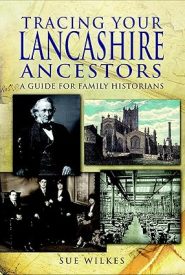







Littleborough is an Ecclesiastical Parish in the county of Lancashire, created in 1745 from a chapelry in Rochdale St Chad Ancient Parish.
Other places in the parish include: Wuerdale, Whitelees, Summit, Smithy Bridge, Sladen, Shore, Rake, Laneside, Gale, Featherstall, Durn, Chelburn, Calderbrook, Calder Brook, and Blatchinworth.
Alternative names:
Parish church: Holy Trinity
Parish registers begin:
- Parish registers: 1787
- Bishop’s Transcripts: 1758
Nonconformists include: Independent/Congregational, Primitive Methodist, and Wesleyan Methodist.
Table of Contents
Adjacent Parishes
- Smallbridge
- Halifax St John in the Wilderness, Yorkshire
- Soyland, Yorkshire
- Wardle St James
- Milnrow
- Walsden
- Ripponden, Yorkshire
Parish History
The Imperial Gazetteer of England & Wales 1870
LITTLEBOROUGH, a village and a chapelry in Rochdale parish, Lancashire.
Littleborough village stands on the river Roch, the Rochdale canal, the Lancashire and Yorkshire railway, and the Roman road to York, at the foot of Blackstone-Edge, 3 miles NE of Rochdale; is supposed, from its position on the Roman road, and from the discovery of some Roman antiquities in its neighbourhood, to stand on or near the site of a Roman station.
It is a large place sharing in the manufactures of Rochdale, and practically a suburb of that town; and has a railway station with telegraph, and a post office under Manchester.
The chapelry contains also the hamlets of Gale, Shore, Durn, Featherstall, Rake, Chelburn, Smithy Bridge, Calder Brook, Summit, Whitelees, Laneside, and Sladen. Pop. in 1861,4,860. Much of the surface is a fine valley, gemmed with mansions and villas.
The living is a vicarage in the diocese of Manchester. Value, £300. Patron, the Vicar of Rochdale. The church, a modern edifice, consists of nave, with tower and spire.
There are chapels for Wesleyans, United Free Methodists, and others, an endowed school, and a national school.
Source: The Imperial Gazetteer of England & Wales [Wilson, John M]. A. Fullarton & Co. N. d. c. [1870-72].
A Topographical Dictionary of England 1848
LITTLEBOROUGH, a parochial chapelry, in the parish and union of Rochdale, hundred of Salford, S. division of the county of Lancaster, 3½ miles (N. E. by E.) from Rochdale.
This place is supposed to have been the site of a small Roman station. The Roman road from Manchester to York skirts the village, and several relics have been found in the immediate vicinity; among them, in 1793, the right arm of a silver statue of Victory, which Dr. Whitaker conjectures, with much probability, from the inscription upon it, “Victoriæ leg vi vic val rvfus vslm,” to have been the arm of a votive statue of Valerius Rufus, broken off, and lost by the Roman army in one of their marches from York to Manchester.
Littleborough lies on the road from Rochdale to Halifax, and is intersected by the Rochdale canal. The Manchester and Leeds railway, also, has a station here; and at a short distance attains its summit level, 330 feet above the Manchester station, and 440 feet above the terminal station at Normanton, in Yorkshire. It proceeds through a tunnel in Calderbrook, 2869 yards in length, 24 feet wide, and 22 in height, and having 14 shafts ten feet in diameter, varying from 50 to 300 feet in depth: in the formation of this tunnel, 1000 men were employed, and more than £251,000 expended.
The population is chiefly employed in three flannel-mills, four cotton-factories, in bleachworks, six coal-pits, a stone-quarry, and in brick-making.
About a mile east of Littleborough is Pike House, the ancient seat of the Halliwells, and now of their descendants, the Beswickes: the oldest remaining parts of the house were built in 1609, and the more modern alterations were made in 1703; the situation is remarkably picturesque, and the grounds are laid out with much taste. Town House has been the seat of the Newall family from the reign of Henry VI., and is now occupied by Mrs. Newall.
The living is a perpetual curacy; net income, £190; patron, the Vicar of Rochdale: there is a parsonage-house. The chapel, dedicated to the Holy Trinity, was licensed for mass by the convent of Whalley, in 1476; it was rebuilt about 1815, in the early English style, and a gallery has since been erected.
There is a place of worship for Wesleyans, and another for Association Methodists.
A free school founded by Theophilus Halliwell, barrister-at-law, in 1688, was endowed by him with lands at Haugh-End, in Sowerby, in the parish of Halifax; and was further endowed in 1699 by the will of his brother, Capt. Richard Halliwell. It affords instruction to about 30 children, who, and the master, are nominated by the founder’s representative, now a minor, of Pike House. Day and Sunday schools have also been built here.
Source: A Topographical Dictionary of England by Samuel Lewis 1848
Parish Records
FamilySearch
Cemeteries
Church Records
Baptismal register, 1840-1907 Author: Temple Chapel (Littleborough, Lancashire : Wesleyan Methodist)
Baptismal register, 1869-1901 Author: Methodist Church (Littleborough, Lancashire)
Baptismal register, 1896-1914 Author: United Methodist Free Church (Littleborough, Lancashire)
Directories
History
Maps
Bury, Rochdale and Littleborough Author: Great Britain. Ordnance Survey
Administration
- County: Lancashire
- Civil Registration District: Rochdale
- Probate Court: Court of the Bishop of Chester (Episcopal Consistory)
- Diocese: Manchester
- Rural Deanery: Rochdale
- Poor Law Union: Rochdale
- Hundred: Salford
- Province: York