Stockport St Mary, Cheshire Family History Guide



















Stockport St Mary is an Ancient Parish and a market town in the county of Cheshire.
Other places in the parish include: Offerton, Torkington, Brinnington, High Lane, and Etchells.
Ecclesiatical Parishes created from Stockport St Mary parish include:
- Disley Ecclesiastical Parish created in 1741
- Dukinfield St Mark Ecclesiastical Parish created in 1846
- Castle Hall Ecclesiastical Parish created in 1846
- Hyde Ecclesiastical Parish created in 1846
- Marple Ecclesiastical Parish created in 1738
- Norbury Ecclesiastical Parish created in 1737
- Chadkirk Ecclesiastical Parish created in 1745 from Romiley chapelry
- Stockport St Thomas Ecclesiastical Parish created in 1827 from Bramhall township (Bramhall was created a separate Ecclesiastical Parish in 1911 from Stockport St Thomas) and Stockport Etchells township
- Bredbury Ecclesiastical Parish created in 1846
- Portwood Ecclesiastical Parish created in 1844 from Brinnington township
- High Lane Ecclesiastical Parish created in 1860
- Werneth Ecclesiastical Parish created in 1841
- Stockport St Peter Ecclesiastical Parish created in 1765
- Hyde St George Ecclesiastical Parish created in 1843
- Dukinfield St John the Evangelist Ecclesiastical Parish created in 1843
- Haughton St Anne Ecclesiastical Parish created in 1881
- Stockport Hall Street Ecclesiastical Parish created in 1893
- Wythenshawe The William Temple Church Ecclesiastical Parish created in 1963
Parish registers begin:
- Parish registers: 1584
- Bishop’s Transcripts: 1605
Nonconformists include:
Table of Contents
Adjacent Parishes
- Stockport St Peter
- Marple
- Stockport St Thomas
- Stockport St Matthew
- Portwood
- Norbury
- Heaton Norris, Lancashire
- Cheadle
- Bredbury

Stockport St Mary Parish Registers
Search online registers of baptisms, marriages, banns and burials including digitised images of original records and registers and indexed transcriptions.
Baptism, Marriage and Burial Records
These records include images of Church of England parish registers of baptism, marriage, and burial records.
Stockport St Mary, Cheshire Church of England Baptisms Marriages and Burials, 1584-1812
Stockport St Mary, Cheshire Church of England Baptisms, 1813-1947
Stockport St Mary, Cheshire Church of England Bishop’s Transcripts – Baptisms – 1812-1844
Marriage and Banns Records
These records include images of Church of England parish registers of marriages and banns records.
Stockport St Mary, Cheshire Church of England Marriages and Banns 1754-1940
Stockport St Mary, Cheshire Church of England Bishop’s Transcripts – Marriages and Banns – 1812-1844
Death and Burial Records
These records include images of Church of England parish registers of deaths and burial records.
Stockport St Mary, Cheshire Church of England Burials 1813-1913
Stockport St Mary, Cheshire Church of England Bishop’s Transcripts – Burials, 1812-1844

Parish History
The Imperial Gazetteer of England & Wales 1870
STOCKPORT, a town, a township, a parish, two sub-districts, and a district, in Cheshire. The town stands on the river Mersey at the influx of the Tame, on the North-western railway at a convergence of five branch-lines, 5¾ miles SSE of Manchester.
It was anciently called Stockfort, Storefort, and Stokeport; is supposed to occupy the site of a Roman station; had a Saxon castle, afterwards a Norman one, now quite extinct, on a spot still called Castle-Hill; was the scene of a repulse of the Danes; became the head of a barony under the ancient Earls of Chester; was held in 1173, by G. Constantin against Henry II.; passed to Robert de Stokeport, and to the Warrens; was occupied, in 1644, by Prince Rupert, in 1645, by Lesley, in 1745, by Prince Charles Stuart.
It was the first seat of the silk-winding trade; and rose to much importance in connexion with the cotton manufacture. Its site is exceedingly unequal; and includes a steep hill, rising boldly from the N. The streets, for the most part, are very irregularly built; and multitudes of the houses rise in successive amphitheatrical tiers, with an aggregate appearance both romantic and picturesque. Great improvements have been made since about 1820; an extensive suburb is on the Lancashire side of the river; and a new great thoroughfare, called Wellington-road, goes evenly from Rowcroft-Smithy to Heaton church, avoiding all the town’s narrow and precipitous ascents and declivities.
A fine eleven-arched bridge, erected in 1826, at a cost of £40,000, takes Wellington-road across the Mersey. Four older bridges also bestride the river; and another, at a cost of £2,000, was built in 1865; while a high-level one, six-arched, at a cost of about £6,000, on a new and direct line from the r. station to the market place, was founded in 1866. A magnificent viaduct, 1,780 feet long, with 22 semicircular arches, constructed at a cost of about £75,000, takes the railway across. The town hall serves as a court-house, and includes a lock-up. The public rooms were built in 1862, at a cost of about £4,000. The new market house, the mechanics’ institution, and the Volunteer armoury were built in the same year; and the last has a spacious drill-ground, and cost about £4,400.
St. Mary’s church was mainly re-built in 1817, at a cost of £30,000; retains a decorated English chancel of the 14th century; and has a fine E window, and a lofty pinnacled tower. St. Thomas’ church was built in 1825, at a cost of £16,000; and is in the Grecian style, with tower and cupola. St. Peter’s church was built in 1768, and is a plain brick structure. An Independent chapel was built in 1866, at a cost of above £5,000; and is in the pointed style, with tower and spire. A Roman Catholic chapel was built in 1862, at a cost of about £5,000; is in the decorated English style; and was left off with unfinished tower, designed to be surmounted with a spire 200 feet high. There are chapels also for Baptists, Quakers, Wesleyans, Primitive Methodists, and Unitarians.
The grammar-school was founded in 1487, and rebuilt in 1832; and has £22 a year from endowment. The national school in Wellington-road was built in 1826, at a cost of more than £6,000. The Sunday school in Duke-street was built in 1806; is four stories high; has a frontage of 140 feet, besides wings; and contains 84 classrooms, a lecture-hall, and a library. There are two other national schools, a British, an industrial, a Wesleyan, and a Roman Catholic. The infirmary was built in 1832, at a cost of nearly £6,000; has a front of 100 feet, in the Doric style; and can accommodate 50 inpatients. The endowed charities amount to £301 a year.
The town has a head post-office, a r. station with telegraph, two banking offices, and several chief inns; is a seat of petty sessions and county courts, and a polling place; and publishes two weekly newspapers. Weekly markets are held on Friday and Saturday; and fairs on 1 Jan., 4 and 25 March, 1 May, 9 July, and 23 Oct. There are flour mills, breweries, foundries, machine-works, and about 52 factories. Most of the factories are of great size; many rise to six, seven, or eight stories; and one measures 300 feet in front and 200 in flank. The town was made a free borough by Robert de Stokeport, in the time of Henry III.; and became a parliamentary borough, with two representatives, by the reform act of 1832. The borough limits include all S. township, and parts of Brinnington, Cheadle-Bulkeley, and Cheadle-Moseley townships in Cheshire, and part of Heaton-Norris township in Lancashire. Amount of property and income tax charged in 1863, £13,790. Electors in 1833, 1,012; in 1863, 1,529. Pop. in 1851, 53,835; in 1861, 54,681. Houses, 11,255.
The township comprises 1,740 acres. Real property, £87,011; of which £2,786 are in gasworks. Pop., 30,746. Houses, 6,113. The parish contains also the rest of the Cheshire portions of the borough, and the townships of Etchells, Bramhall, Norbury, Torkington, Werneth, Hyde, Bredbury, Romiley, Offerton, Marple, Dukinfield, and Disley-Stanley; and is ecclesiastically cut into the sections of S.-St. Mary, S.-St. Thomas, S.-St. Peter, Bredbury, Disley, Dukinfield, Dukinfield-St. Mark, Dukinfield-St. Matthew, Castle-Hall, High-Lane, Hyde, Hyde-St. Thomas, Marple, Norbury, Portwood, Romiley, Werneth, and Moor. The living of S.-St. Mary is a rectory, and the livings of S.-St. Thomas and S.-St. Peter are p. curacies, in the diocese of Chester. Value of St. M., £2,700; of St. T., £300; of St. P., £220. Patron of St. M. and St. T., Lord Vernon; of St. P., the Rev. H. Wright. The other livings are separately noticed.
The two sub-districts are S.-First and S.-Second; lie all within the Cheshire part of the borough; and comprise 7,017 acres. Pop., 41,084. Houses, 8,376. The district excludes Dukinfield and Disley-Stanley townships; includes parts of Cheadle and Manchester parishes, and an extra-parochial tract; and is divided into seven sub-districts. Acres, 30,709. Poor rates in 1863, £45,980. Pop. in 1851, 90,208; in 1861, 94,360. Houses, 19,127. Marriages in 1863, 892; births, 3,073, of which 255 were illegitimate; deaths, 2,638, of which 1,235 were at ages under 5 years, and 29 at ages above 85. Marriages in the ten years 1851-60, 10,142; births, 33,286; deaths, 23,643. The places of worship, in 1851, were 20 of the Church of England, with 15,371 sittings; 12 of Independents, with 6,621 s.; 5 of Baptists, with 1,270 s.; 1 of Quakers, with 230 s.; 2 of Unitariaans, with 870 s.; 21 of Wesleyans, with 8,216 s.; 4 of New Connexion Methodists, with 1,791 s.; 8 of Primitive Methodists, with 1,836 s.; 3 of the Wesleyan Association, with 974 s.; 1 of Southcottians, with 200 s.; 1 undefined; 2 of Roman Catholics, with 1,330 s.; and 2 of Latter Day Saints, with 150 attendants. The schools were 22 public day schools, with 2,991 scholars; 141 private day schools, with 5,214 s.; 79 Sunday schools, with 21,136 s.; and 47 evening schools for adults, with 925 s. The workhouse is in the town, and has capacity for 700 inmates.
Source: The Imperial Gazetteer of England & Wales [Wilson, John M]. A. Fullarton & Co. N. d. c. [1870-72].
Parish Records
County Borough of Stockport Special Report on an Outbreak of Smallpox 1904 by Meredith Young, M.D., Mast. Surg., D.P.H. (Lond), D.S.Sc. (Vict), Medical Officer of Health and Medical Superintendent, Corporation Hospitals. March 13th 1905. – This book is a free download from Parishmouse
Historical Maps
British National Grid Ref: SJ 89799 92461
BNG Eastings, Northings: 389799, 392461
Latitude, Longitude: 53.428839, -2.154990
View detailed 19th-century Ordnance Survey maps from the National Library of Scotland Maps – includes OS 25 inch 1892-1918 maps, a vast range of other historical OS maps and land use maps. These maps reveal old street layouts, parish boundaries, and landmarks long since vanished.
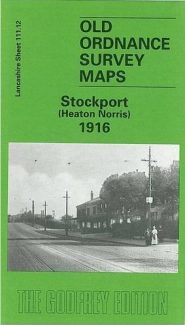
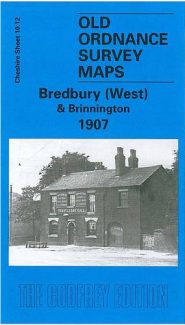
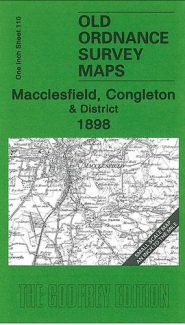
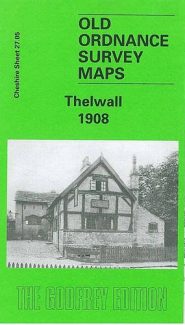
Alan Godfrey Old Ordnance Survey Maps

The full range of Cheshire maps produced by Alan Godfrey are available in the Cheshire Maps section of the Books & Maps area. There you can search by principal villages and parishes, by key features for town and city plans, and sort the maps by type and scale. Coverage is taken from the places listed in Alan Godfrey’s own map descriptions, although smaller parishes may not be explicitly named. View all the Cheshire & District Alan Godfrey Maps.
Administration
- County: Cheshire
- Civil Registration District: Stockport
- Probate Court: Pre-1541 – Court of the Bishop of Lichfield (Episcopal Consistory), Post-1540 – Court of the Bishop of Chester (Episcopal Consistory)
- Diocese: Pre-1541 – Lichfield and Coventry, Post-1540 – Chester
- Rural Deanery: Macclesfield
- Poor Law Union: Stockport
- Hundred: Stockport Borough
- Province: York
Sources
The following sources have been used to compile this article.
- F. Youngs, Local Administrative Units: Northern England (London: Royal Historical Society, 1991)
- FamilySearch Research Wiki – Cheshire, England Genealogy
- Cheshire Archives and Local Studies Catalogue
- Ancestry.co.uk