Chester Cathedral, Cheshire Family History Guide

























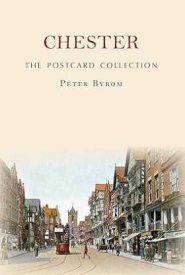
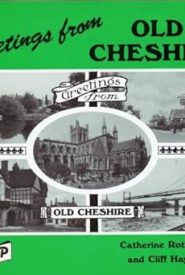

Chester Cathedral in Cheshire is the seat of the Diocese of Chester.
Alternative names: Chester Christ and Blessed Virgin Mary, Chester St Werburgh
Chester Cathedral location:
- British National Grid Ref: SJ 40597 66500
- BNG Eastings, Northings: 340597, 366500
- Latitude, Longitude: 53.192251, -2.890544
Parish registers begin:
- Parish registers: 1687
- Bishop’s Transcripts: 1813
Nonconformists include:
Table of Contents
Adjacent Parishes

Chester Cathedral Parish Registers
The Registers of Chester Cathedral, 1687–1812, include baptisms, marriages, and burials. They are available to read online for free, with an option to download the PDF for personal research.

Search online registers of baptisms, marriages, banns and burials including digitised images of original records and registers and indexed transcriptions.
Baptism, Marriage and Burial Records
These records include images of Church of England parish registers of baptism, marriage, and burial records.
Chester Cathedral, Cheshire Church of England Baptisms Marriages and Burials, 1687-1812
Chester, Cathedral, Cheshire Church of England Baptisms, 1813-1935
Marriage and Banns Records
These records include images of Church of England parish registers of marriages and banns records.
Chester Cathedral, Cheshire Church of England Marriages and Banns 1869-1981
Death and Burial Records
These records include images of Church of England parish registers of deaths and burial records.
Chester Cathedral, Cheshire Church of England Burials 1813-1896
Chester Cathedral, Cheshire Church of England Bishop’s Transcripts – Burials, 1813-1816
Parish History
A Topographical Dictionary of England 1848
The cathedral, originally the conventual church of St. Werburgh, was at first dedicated to St. Peter and St. Paul, but subsequently placed by Ethelfreda under the patronage of the Saxon saint Walmgha, daughter of Wulphere, King of Mercia: that princess, and Leofric, Earl of Mercia, were great benefactors to the church, as well as Hugh Lupus, who substituted Benedictine monks for Secular canons.
On the suppression of the abbey, a dean, six canons or prebendaries, and six minor canons, were appointed in lieu of the abbot and monks, the last abbot being made dean: there are now a dean, four canons, four honorary canons, four minor canons, two archdeacons, a chancellor of the diocese, registrar, sacrist, and precentor. At the Dissolution the cathedral was dedicated to Christ and the Blessed Virgin.
It stands on the eastern side of Northgate street, and exclusively of some interesting remains of the abbey, the present building was erected in the reigns of Henry VII. and Henry VIII. With the exception of the western end, it is externally a heavy irregular pile: the tower in the centre, originally intended to sustain a spire, is supported by massive piers, and is in the later style of English architecture.
The interior is elegant and impressive, and exhibits portions in the Norman and the early and decorated English styles. The piers of the nave are in the decorated style, with flowered capitals; and the clerestory, which is in the later style, has a fine range of windows. To the east of the north transept are traces of some chapels in the early English style; the south transept, which is larger than the north, and consists of a centre and two aisles, is in the decorated style, and, being separated from the cathedral by a screen, forms the parish church of St. Oswald.
The choir has a chequered floor of black and white marble, and the stalls are adorned with light tabernacle-work skilfully executed; the bishop’s throne, usually deemed Werburgh’s shrine, is a beautiful specimen of workmanship, in the style of the early part of the fourteenth century. The chapter-house, an admirable relic of antiquity, in the early English style, stands in the eastern walk of the cloister; it was built by Earl Randulph the first, and became the burial-place of the earls of the original Norman line, except Richard, who perished by shipwreck.
The cathedral was re-opened at the close of 1845, having undergone an almost complete restoration. Beneath part of the prebendal houses is a fine Norman crypt, in good preservation, which supported the great hall of the monastery, and had lain concealed till it was cleared out and rendered accessible by order of Dr. Blomfield, the present Bishop of London, who then presided over this see.
Source: A Topographical Dictionary of England by Samuel Lewis 1848
See Also Chester, Cheshire Family History Guide
Historical Maps
View detailed 19th-century Ordnance Survey maps from the National Library of Scotland Maps – includes OS 25 inch 1892-1918 maps, a vast range of other historical OS maps and land use maps. These maps reveal old street layouts, parish boundaries, and landmarks long since vanished.
Alan Godfrey Old Ordnance Survey Maps

The full range of Cheshire maps produced by Alan Godfrey are available in the Cheshire Maps section of the Books & Maps area. There you can search by principal villages and parishes, by key features for town and city plans, and sort the maps by type and scale. Coverage is taken from the places listed in Alan Godfrey’s own map descriptions, although smaller parishes may not be explicitly named. View all the Cheshire & District Alan Godfrey Maps.
Administration
- County: Cheshire
- Civil Registration District: Great Boughton
- Probate Court: Not Applicable
- Diocese: Pre-1541 – Lichfield and Coventry, Post-1540 – Chester
- Rural Deanery: Not Applicable
- Poor Law Union: Not Applicable
- Hundred: Chester Borough
- Province: York